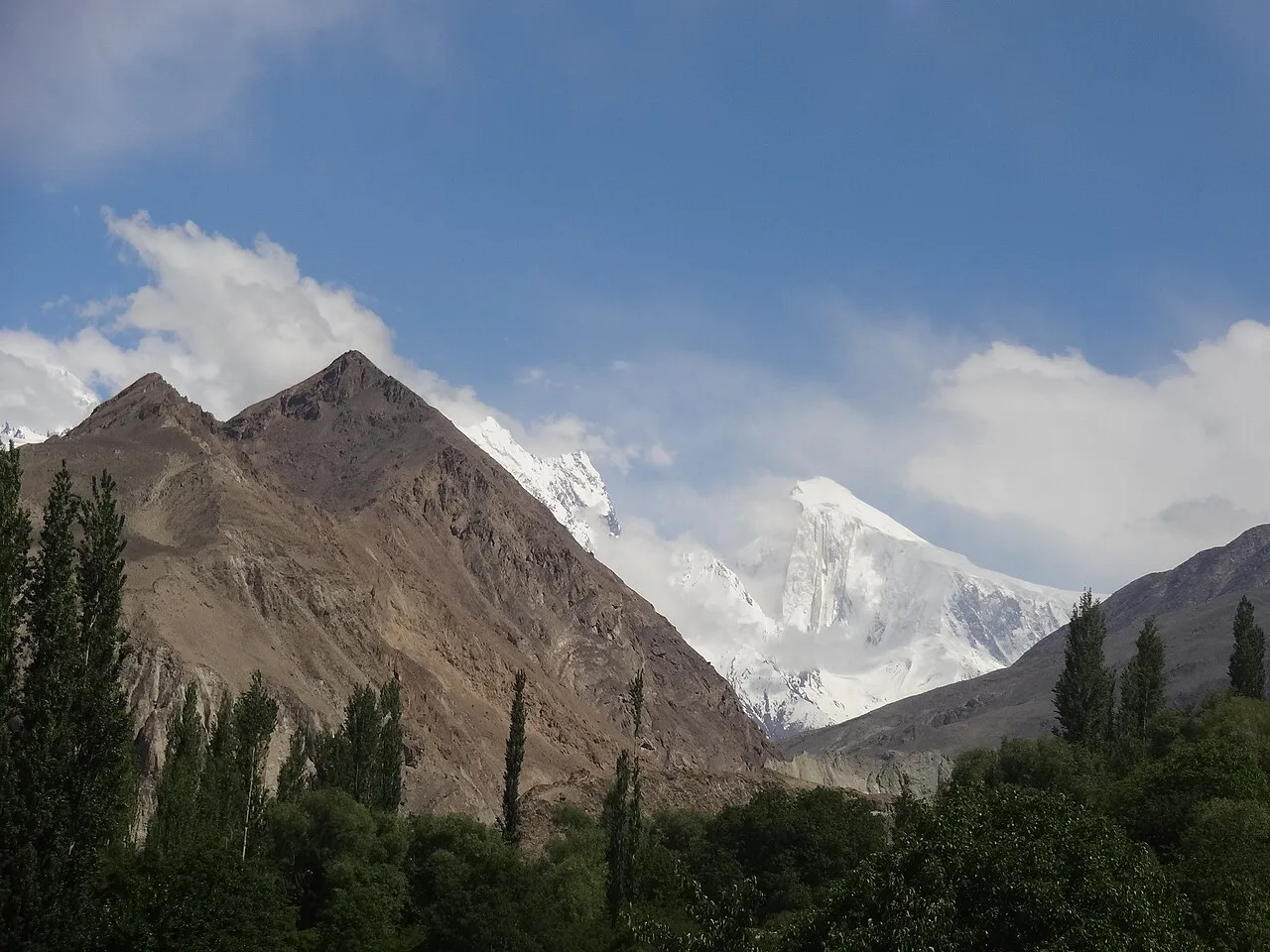
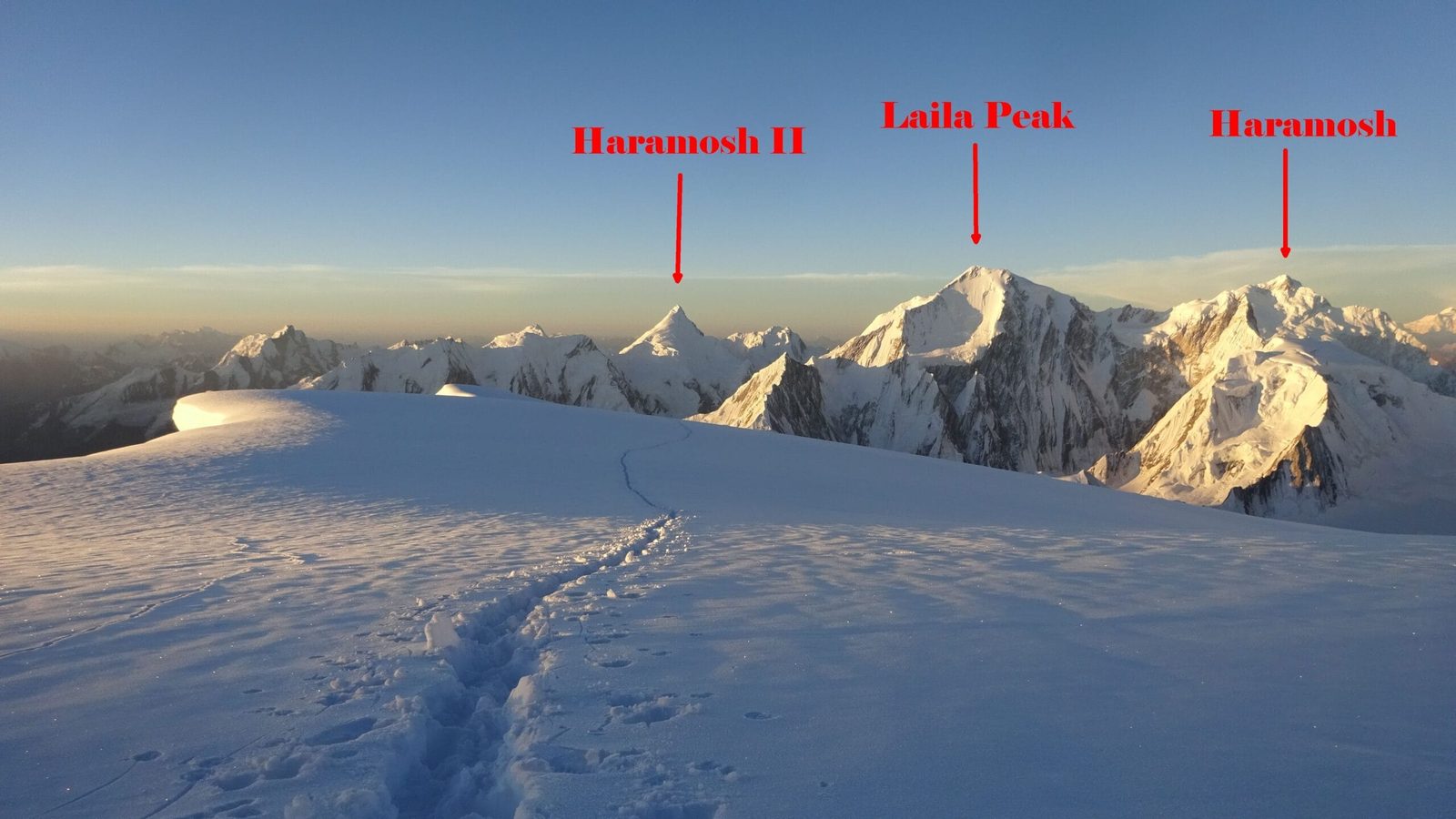
The Spantik (Golden Peak) Expedition (7,027 m) is a guided trip lasting 21 days in Gilgit-Baltistan, northern Pakistan, topping out at 7,027 m. 4 fixed departures are open from $6,400 per person, all-inclusive from Islamabad.
Spantik (Golden Peak) Expedition (7,027 m) — 21 Days, Full-Board
Spantik — the Golden Peak — is the honest way into Himalayan climbing. At 7,027 m it is a genuine high-altitude summit, but the southeast ridge we climb is a long snow route rather than a technical one: no fixed-rope gymnastics, no objective horror show, just altitude, cold and distance. That is exactly what makes it the right first 7,000er, and it is why we send climbers here before we will take them to an eight-thousander.
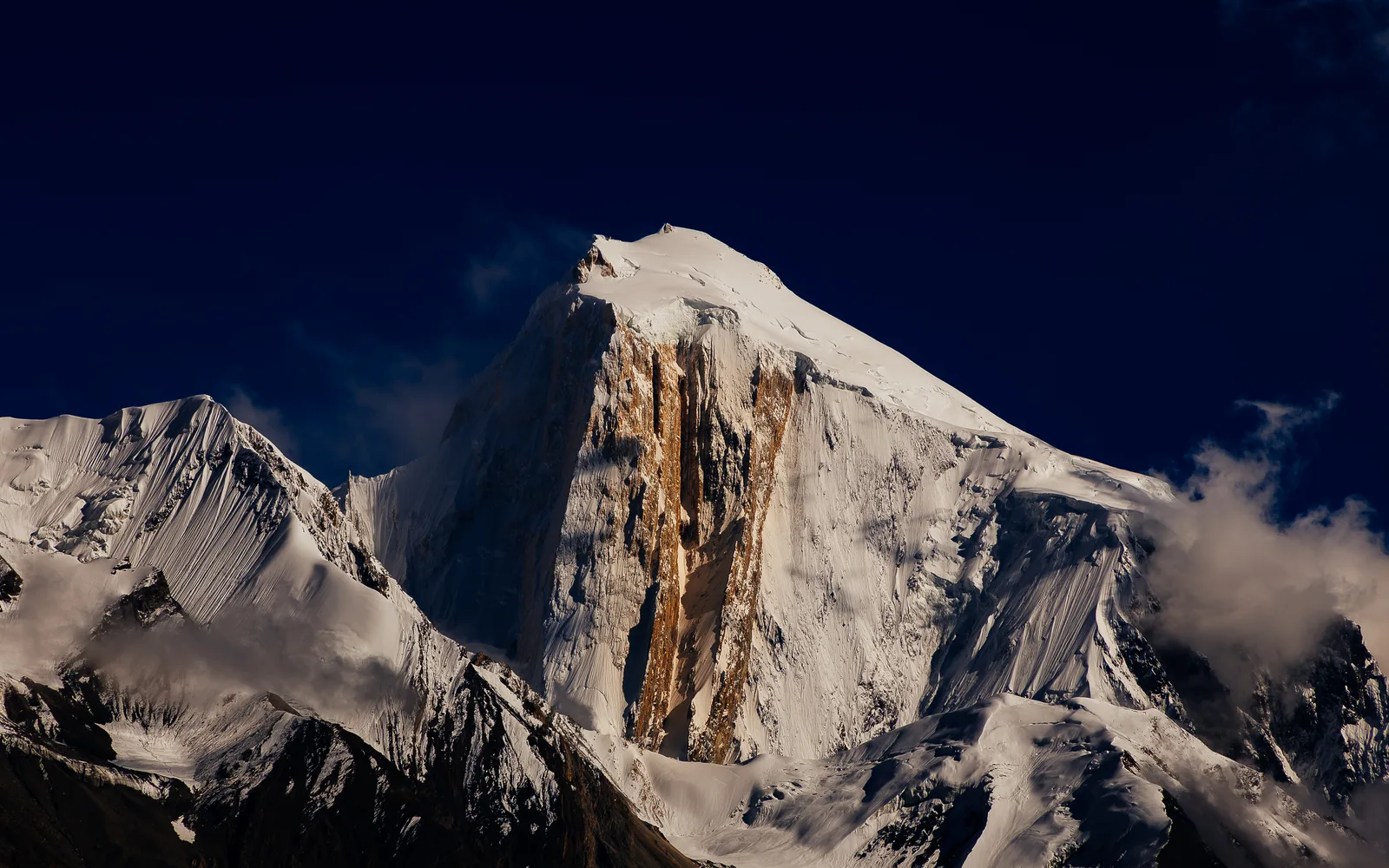
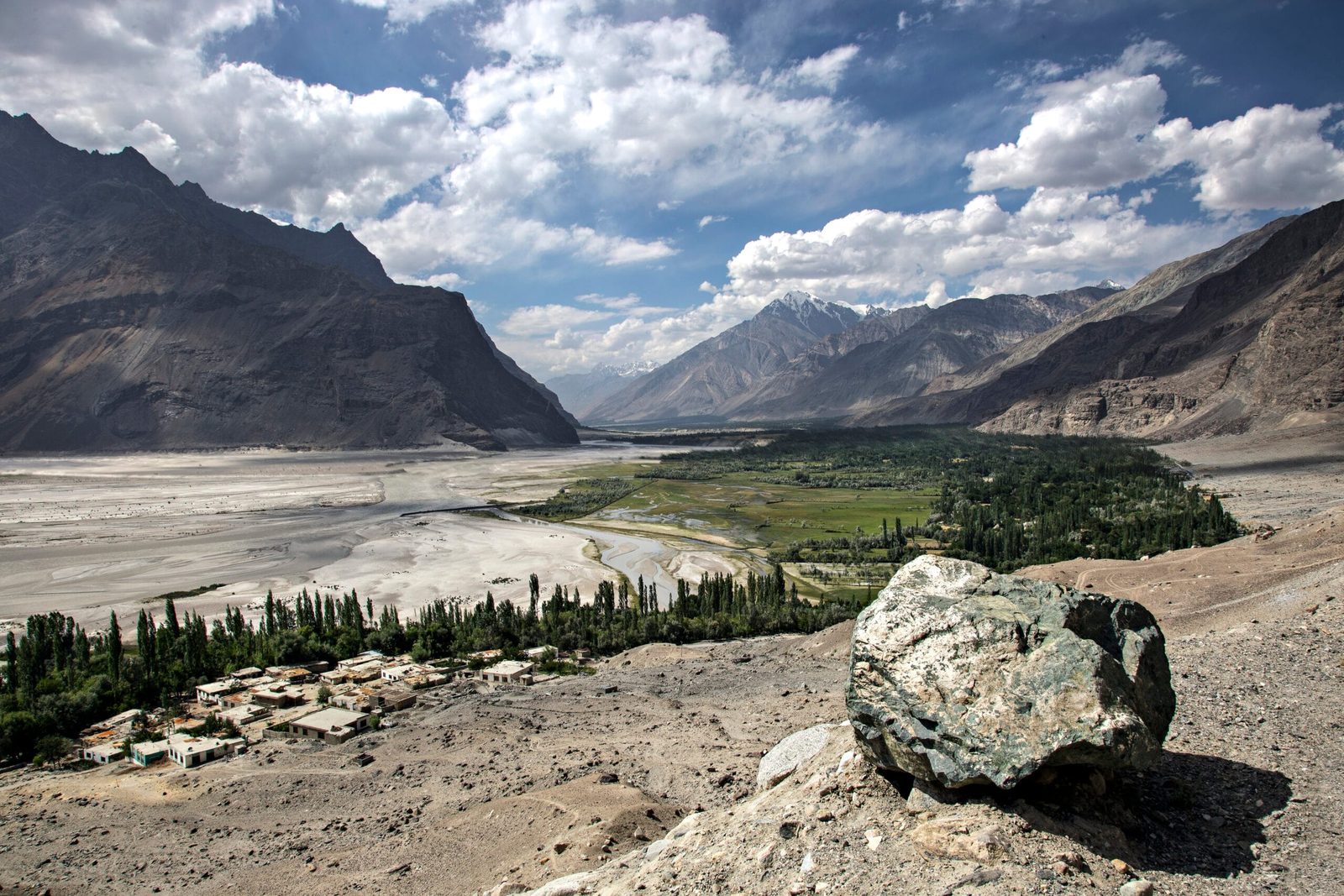
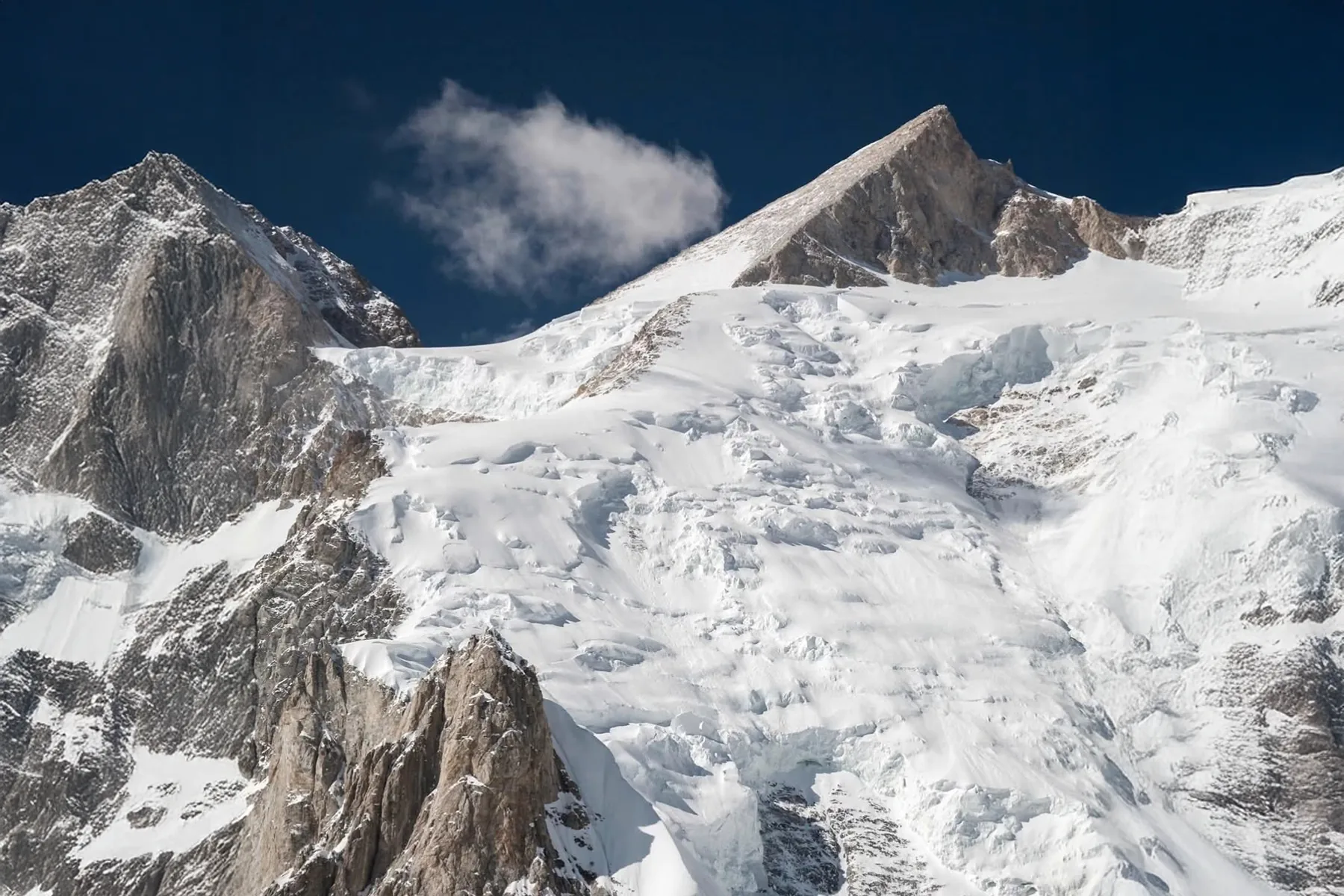
Twenty-one days from Skardu, up the Basha valley to Arandu and onto the Chogo Lungma glacier. Full-board covers the peak royalty and permits, the liaison officer, transport, porters, full base camp, high-altitude support above BC and fixed rope where the route needs it. The famous Golden Pillar on the northwest face is one of the hardest walls in the Karakoram — we are not climbing it, and anyone who implies otherwise is selling you a photograph.
- Duration
- 21 Days - 20 Nights
- Max altitude
- 7,027 m
- Grade
- Expedition
- Days on foot
- 3–4
- Best season
- Summer ( mid-June - August )
- Group size
- Max 8
Spantik Expedition Price
Our full-board Spantik expedition is $6,400 per person — peak royalty and permits, liaison officer, Islamabad–Skardu flights, the jeep to Arandu, porters, full base camp, high-altitude support above BC, three camps and fixed rope where the route needs it. Published prices run with a minimum team of four; parties of one to three are quoted privately, because the government peak royalty is charged per team rather than per climber. Base-camp-service and premium tiers are quoted on request. Twenty-one days, summit 7,027 m.
Fixed Departures
Fixed departures are scheduled dates you join as part of a group, rather than arranging your own trip.
| Departure | Dates | Price | Availability | Deposit | Book |
|---|---|---|---|---|---|
| Expedition 01 | 10 Jun – 21 Jul | $6,400/person | 8 of 8 places | $640 | Book now |
| Expedition 02 | 20 Jun – 31 Jul | $6,400/person | 6 of 8 places | $640 | Book now |
| Expedition 03 | 8 Jun – 19 Jul | $6,400/person | 8 of 8 places | $640 | Book now |
| Expedition 04 | 18 Jun – 29 Jul | $6,400/person | 8 of 8 places | $640 | Book now |
Private & customised groups
These are private departures, priced by the size of your party rather than by a set date.
| Group size | Price | What it includes |
|---|---|---|
| Base Camp Service | On request | For self-sufficient alpine teams. Permits, royalty, liaison officer, transport, porters and full base camp — nothing above BC. Priced on request while we confirm the royalty band for a 7,000 m peak. |
| Full-Board Guided | $6,400 | High-altitude support above base camp, three camps, fixed rope where needed, expedition guide, BC staff and forecasting. |
| Premium (2 HAP) | On request | Higher support ratio and private BC tent. Priced on request. |
Is this expedition for you?
Only if you have climbed high before. This is a mountaineering expedition, not a trek.
Graded Expedition.
What this mountain asks of you
The highest point is 7,027 m. At that altitude acclimatisation is not optional, and the turnaround decision belongs to your guide.
An expedition needs a Trekking & Mountaineering visa rather than a tourist visa, plus an NOC and a peak royalty. We arrange the NOC and the permits.
One thing we do insist on: travel insurance that covers helicopter evacuation.
Expedition Plan
Expedition Plan — Spantik (7,027 m)
Twenty-one days, run in phases rather than fixed daily steps: Islamabad formalities, the jeep to Arandu, the Chogo Lungma approach, two acclimatisation rotations, a weather window and a summit push.
Day 1Arrive Islamabad
540 m
Team assembles. Kit check, insurance and documentation review, and dinner with your expedition leader.
Day 2Islamabad — Briefing & Liaison Officer
540 m
The mandatory expedition briefing and formalities, and you meet the liaison officer who travels with the team.
Day 3Fly to Skardu
2,230 m
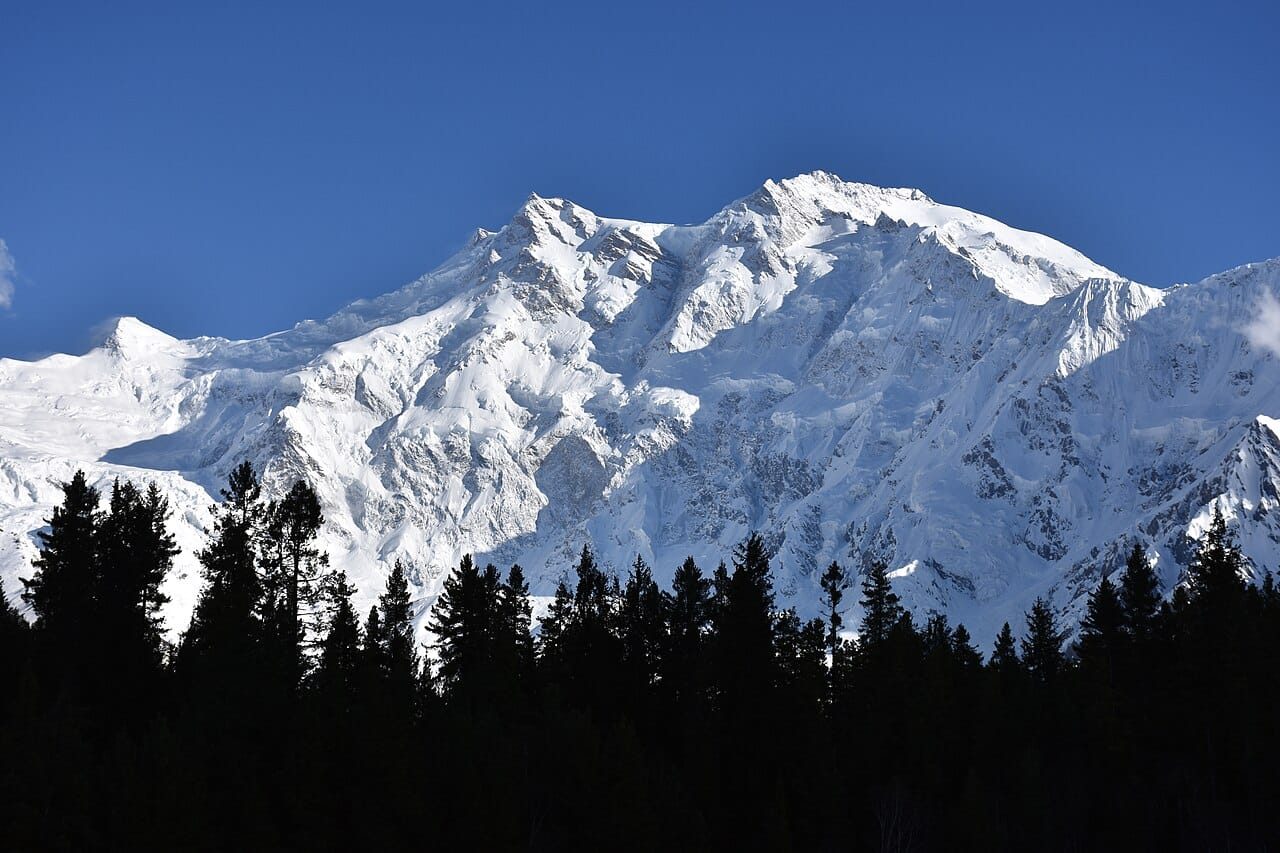
The flight up the Indus past Nanga Parbat. Weather-dependent; the schedule carries slack for it.
Day 4Skardu — Load-Out
2,230 m
Final gear check, rope and food packing, porter loads weighed. Last hot shower for three weeks.
Day 5Skardu to Arandu
2,900 m
By 4×4 up the Shigar and Basha valleys to the roadhead village of Arandu. Apricot orchards and the last shop.
Day 6Arandu to Chogo Brangsa
3,600 m
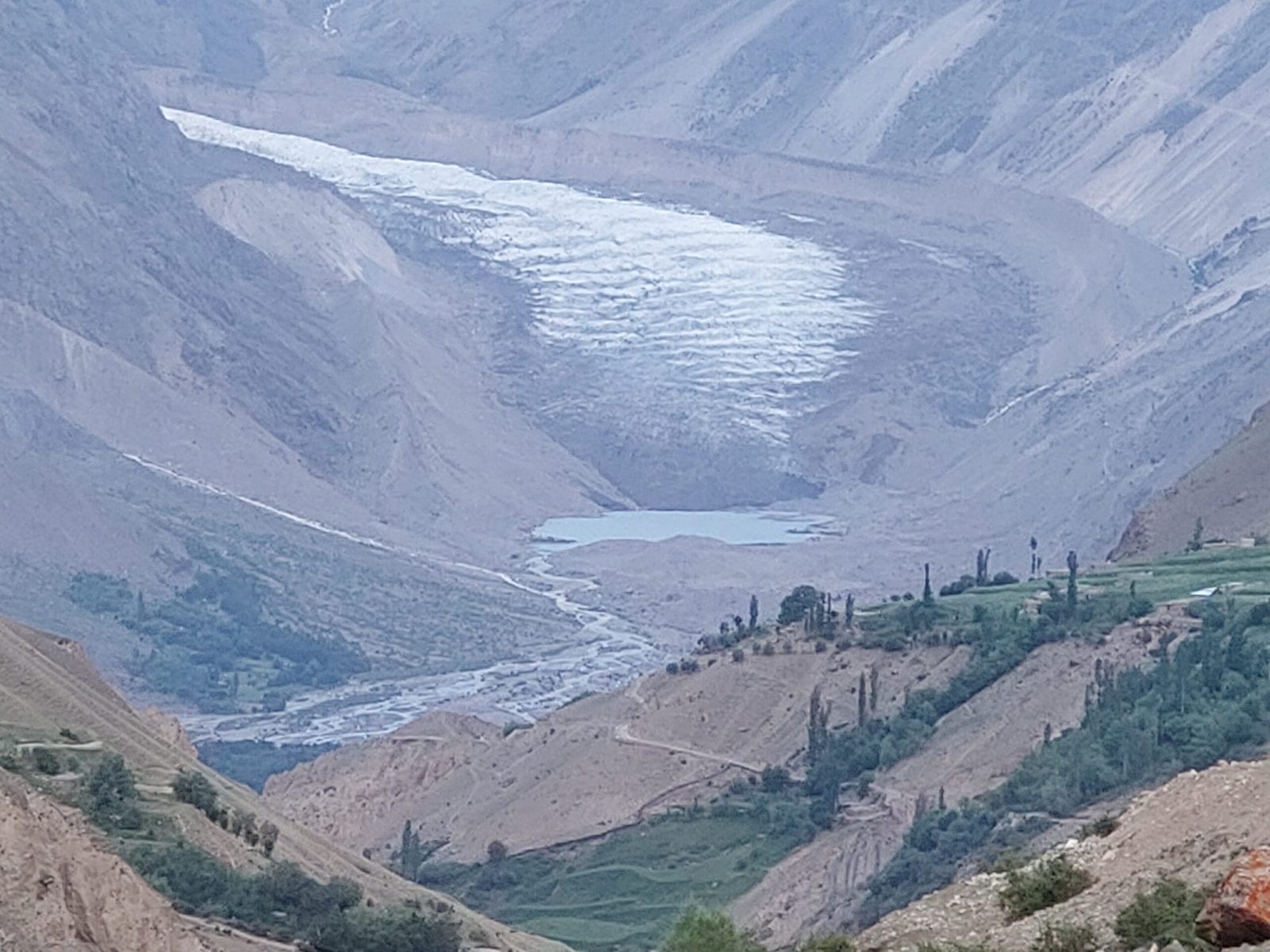
The approach begins, up onto the moraine of the Chogo Lungma glacier. A short day to start moving.
Day 7Chogo Brangsa to Bolocho
4,000 m
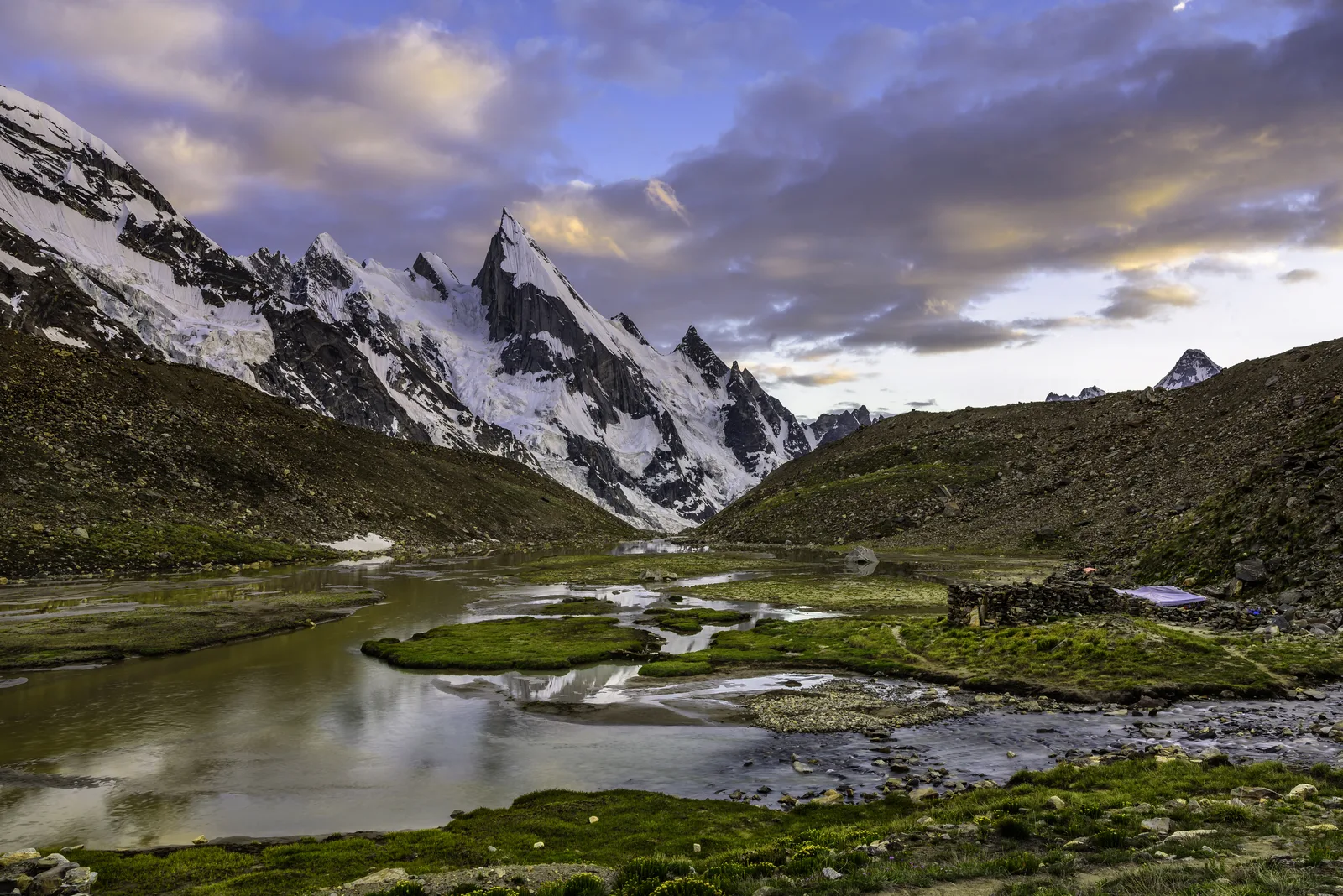
A full day on the glacier with Spantik's golden pillar rising ahead of you.
Day 8Bolocho to Base Camp
4,300 m
The last approach stage onto the upper Chogo Lungma. Base camp established below the southeast ridge.
Day 9Base Camp — Puja & Setup
4,300 m
The puja, dome and kitchen up, rope and loads staged, medical baseline taken. The climb proper starts here.
Day 10Rotation 1 — Camp 1
~5,000 m
First carry onto the ridge and a night at Camp 1, then back down to base camp to recover.
Day 11Base Camp — Rest & Recovery
4,300 m
Full rest at base camp. Eat, sleep, and let the body build red cells.
Day 12Rotation 2 — Camp 2
~5,800 m
Second rotation, sleeping higher on the ridge and stocking the route before descending to rest.
Day 13Base Camp — Weather Window
4,300 m
Waiting. Even on a 7,000er the weather decides, and we move when the forecast says so rather than when the schedule does.
Day 14Summit Push — Camp 3
~6,400 m
Up through the camps to the high camp on the shoulder. An early night and a colder one.
Day 15Summit Day — Spantik
7,027 m
An alpine start onto the summit slopes and a long, steady climb to the top of the Golden Peak. The ground is not technical by 7,000 m standards — it is simply high, cold and long, and it is a genuine Himalayan summit.
Day 16Descend & Clear the Mountain
4,300 m
Down through the camps, stripping the route and carrying everything off. We leave the mountain as we found it.
Day 17Base Camp — Contingency
4,300 m
Held in reserve for a second summit attempt or bad weather. If unused, we start out early.
Day 18Base Camp to Arandu
2,900 m
Off the glacier and back down the Chogo Lungma to the roadhead.
Day 19Arandu to Skardu & Departure
2,230 m
The jeep down the Basha valley, then the flight out and onward connections. Assalam-o-Alaikum.
What’s included in the price
Every fixed departure is all-inclusive from Islamabad. This is exactly what your $6,400 per person covers, and the handful of things it does not — so there is nothing to settle at the trailhead.
Included in the price
- Peak royalty
- Peak permit
- Liaison officer and all government fees
- Islamabad-Skardu flights
- Hotels in Islamabad and Skardu
- The 4×4 to and from Askole
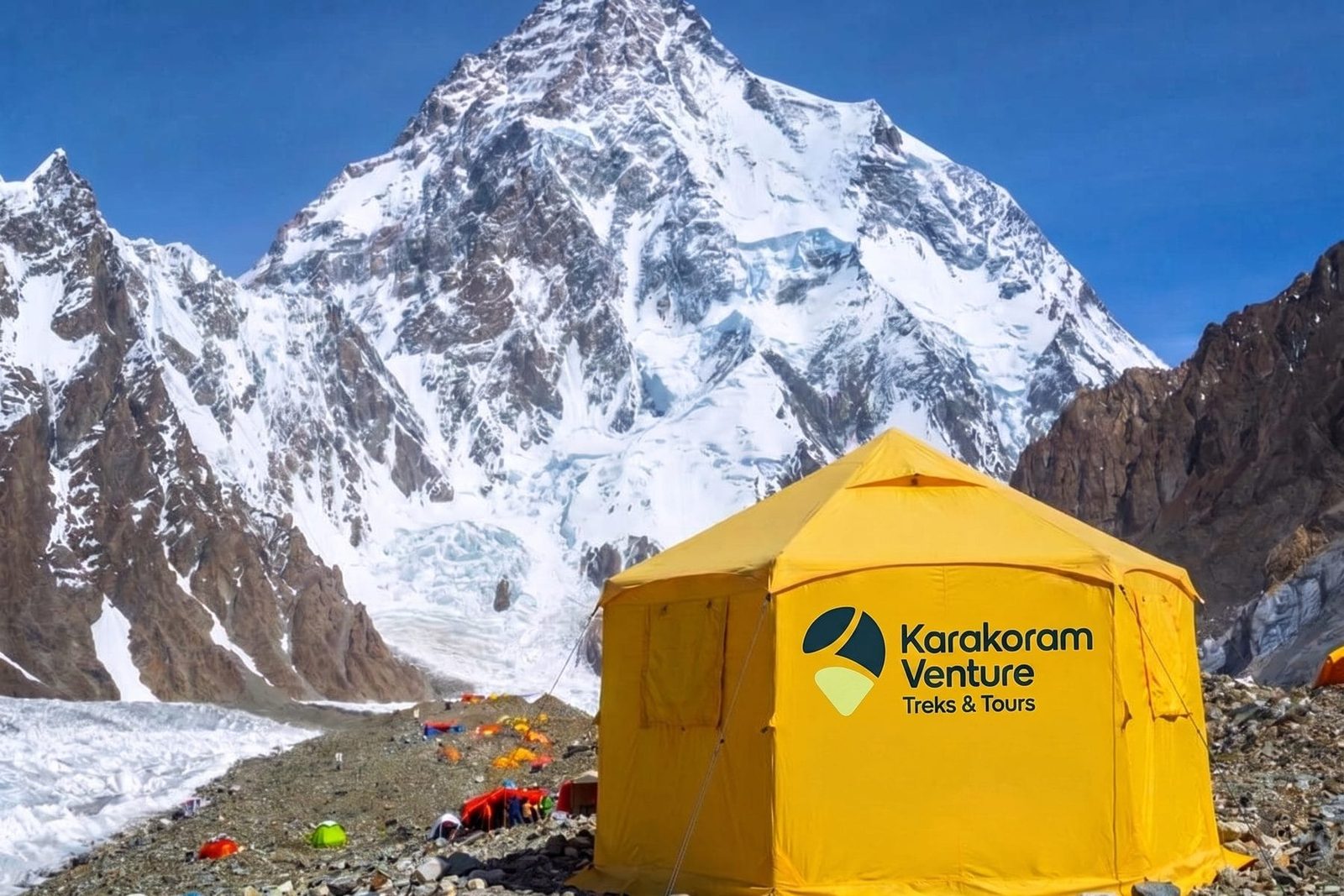
- Full base camp for the permit window — dome
- Kitchen
- Dining and toilet tents
- BC cook and staff
- All meals
- Porters in and out
- Satellite phone
- Weather forecasting and BC medical kit
- Full-board tier adds: one high-altitude porter per climber above BC
- Four high camps with tents
- Fuel and food
- Share of fixed rope and communal hardware
- Bottled oxygen allocation
- Expedition guide
- Helicopter-rescue coordination
Not included
- International flights
- Pakistan visa fees
- Your personal climbing equipment and down suit
- Mountaineering and evacuation insurance (mandatory
- Arranged by you)
- Summit bonuses and staff tips
- Personal oxygen beyond the stated allocation
- Helicopter costs themselves
- A summit. We do not sell one and we will not imply one. Weather
- Snow conditions and your own condition decide the outcome
- The guide’s turnaround call is final
Resources
Free guides from our local team, so you arrive ready.
- Trekking gear list what to pack
- Trekking medicine & altitude staying well up high
- Maps, books, visa & permits planning your trip
Why Karakoram Venture
Because the people who take you up this mountain are from it. Our guides grew up in these valleys, and they are our own team — not a booking desk handing you to whoever is cheapest that week. Every one of them holds a guide licence from DTS Gilgit-Baltistan and the Federal DTS, renewed each year, and worked at least five years in the region before applying for it. Most also hold Wilderness First Aid.
Because the safety is real, and we will name it rather than imply it. A satellite phone travels in every camp, we hold established helicopter-rescue contacts for this region, and we tell you exactly which travel insurance to carry. Budget operators cut precisely these things, because you cannot see them on a web page.
Because the price is honest. Local infrastructure is why $6,400 per person covers the trip from Islamabad rather than a stripped-down base rate. Exactly what it includes — and the handful of things it does not — is set out above.
How to book this trip
More About the Spantik Expedition
Booking & Payment
Minimum team size is four climbers. The Gilgit-Baltistan peak royalty is charged per team, not per person, so a party of one to three carries a materially higher cost per climber. We will still run it — just ask, and we will quote you privately and honestly rather than hide a supplement in the headline price.
A deposit of 10% confirms your place. 50% is due at 120 days before departure and is used to file the peak permit and royalty; the balance is due at 60 days.
Places are confirmed only once the permit application is filed in your name. Book through our website or directly on WhatsApp — we will want to talk to you before we accept a booking.
Cancellation Policy
Peak royalty, permit and liaison-officer fees are paid to government months in advance and are non-refundable once filed, whatever the reason for cancellation. This is different from our trekking terms and we want it understood before you pay.
Cancel 120+ days before departure: everything except the filed permit costs is refunded. 60-119 days: 50% of the remaining balance. Under 60 days: non-refundable.
If we cancel the expedition for operational reasons, you receive a full refund with no deductions, or a free transfer to the next season. If it is cancelled by events beyond anyone's control (extreme weather, natural disaster, a government travel advisory or a road or flight closure), you receive a free transfer to new dates or a credit valid for 24 months, plus a refund of every cost we can recover; non-recoverable permit costs are itemized and deducted.
Permits & Documentation
Spantik requires a peak permit and royalty paid to the Gilgit-Baltistan authorities, a government liaison officer who travels with the team, and accident insurance for every member. One peak per permit.
You need Pakistan’s Mountaineering visa, not a tourist or trekking visa. High-altitude porters must carry insurance to Rs 2,000,000, which we hold. We file all of it; you supply passport, photographs, climbing CV and insurance certificate.
Health & Fitness
This is a 7,000 m expedition and it is a reasonable first one, but it is not a trek. No previous 7,000 m experience is required; you do need solid trekking fitness at altitude, competence in crampons and with an ice axe on moderate snow slopes, and the ability to walk for eight to ten hours at height on summit day. If you have never used crampons, tell us and we will build that in.
Minimum age 21. A full medical, including a recent cardiac assessment, is required before we accept a booking. Insurance must cover mountaineering above 6,000 m and helicopter evacuation — standard travel insurance will not do it.
Important Notes
Carry at least 2 recent passport-size photos for verification and documentation.
A valid passport (foreign nationals) or CNIC (Pakistani nationals) is mandatory for booking and travel.
Keep your original passport or CNIC with you throughout the tour for security checks and hotel check-ins.
Foreign nationals need a valid passport and the correct visa; any NOC and trekking/restricted-area permits are arranged by Karakoram Venture.
Special Information
Professional and experienced Tour Manager available from start to end of the trip.
Delicious and fresh daily meals included from Day 1 until departure.
No complimentary meals provided on flights or during transit stops.
Follow updated state travel policies carefully for a hassle-free journey.
Transportation Details
Comfortable and spacious A/C Coaches for long trips and intercity travel.
Sturdy 4x4 jeeps for mountain roads and sightseeing (up to 7 pax per vehicle).
Reliable 4x4 vehicles (Land Cruiser / Prado) for off-road and high-altitude excursions.
Arrival & Departure Guidelines
Day 1: Report at the designated airport on time as per schedule.
Final Day: Depart after successfully completing the full itinerary.
Frequently Asked Questions
How much does a Spantik expedition cost with you?
Full-board guided is $6,400 per person — royalty and permits, liaison officer, all transport, full base camp, high-altitude support above BC, three camps and fixed rope where the route needs it. Base-camp-service and premium tiers are quoted on request while we confirm the royalty band that applies to a 7,000 m peak; we would rather quote you privately than publish a number we are not certain of.
Is there a minimum team size?
Is Spantik a good first 7,000 m peak?
Yes, and that is precisely why we sell it. The southeast ridge is a long snow route rather than a technical climb — no sustained steep ground, no serac roulette. What it asks for is altitude tolerance, cold tolerance and the patience to keep walking uphill for hours. If you have trekked to 5,000 m comfortably and can use crampons, Spantik is a realistic next step.
What experience do I need?
No previous 7,000 m experience is required. You need solid trekking fitness at altitude, competence in crampons and with an ice axe on moderate snow, and the ability to keep going for eight to ten hours on summit day. If you have never worn crampons, say so at booking and we will build the training in at base camp rather than pretend it is not needed.
What about the Golden Pillar?
We do not climb it. The northwest face of Spantik is one of the hardest big walls in the Karakoram and it has seen a handful of ascents by world-class alpinists. Our expedition climbs the southeast ridge, which is the normal route. Any operator showing you a photograph of the pillar while selling a guided 7,000er is being loose with the truth.
How long is the expedition and why?
Twenty-one days. Three to four days each way on the Chogo Lungma approach and the rest at and above base camp for two acclimatisation rotations and a weather window. It is short by 8,000 m standards because the mountain is lower and the approach is quicker — but the acclimatisation cannot be rushed, and anyone offering Spantik in ten days is selling you a low summit chance.
Do you use bottled oxygen?
No. Spantik is climbed without supplementary oxygen and there is no reason to carry it at 7,027 m for a fit, acclimatised climber. We carry emergency oxygen at base camp for medical use, which is a different thing entirely.
What permits and visa do I need?
A peak permit and royalty paid to the Gilgit-Baltistan authorities, a government liaison officer with the team, and accident insurance for everyone. You travel on Pakistan's Mountaineering visa — not the tourist visa and not the trekking visa. We file all of it; you provide passport, photographs and your insurance certificate.
What happens if I cannot summit?
You come home safely. There is no refund for an unsuccessful summit — the cost is incurred whether you top out or not — but the turnaround decision gets made on conditions and on your state, not on how far you have come. Spantik has a better summit rate than any 8,000er we run, which is another reason it is the right place to start.
What should I climb after Spantik?
Gasherbrum II or Broad Peak are the honest next steps, and both are eight-thousanders we run from the same office. K2 is not a second mountain. We will tell you plainly where we think you are after we have climbed with you.